
Sleeping With the TV On? Here's How It May Be Hurting Your Sleep, Heart and Overall Health
Dr. Brooke Brimm explains how falling asleep with the television on can disrupt melatonin production, increase health risks and leave you feeling exhausted—and shares healthier alternatives for, better sleep and a better night's rest.

We’ve all been there: you drift off to your favorite sitcom, telling yourself the background noise helps calm your racing mind. It feels harmless, cozy, even. But while falling asleep to the TV might feel comforting, leaving it running until morning sabotages your body in ways you might not realize.
Here is what actually happens when you spend the night in the glow of a television screen, and why it is time to break the habit.
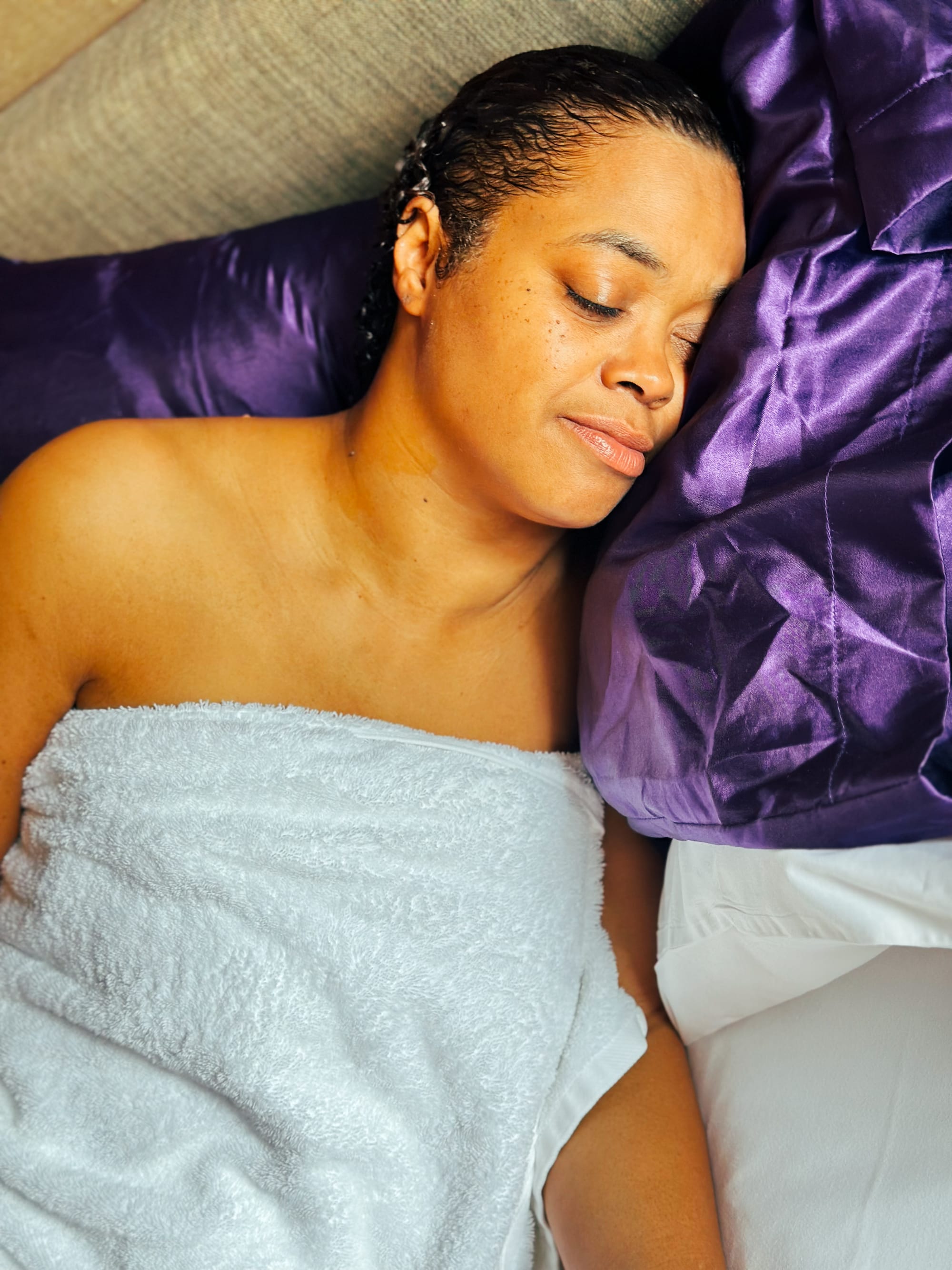
1. Blue Light Crushes Your Melatonin Production
Your body relies on a delicate biological clock known as your circadian rhythm. As the sun sets, your brain naturally pumps out melatonin the hormone responsible for telling your body it is time to rest.
Televisions emit concentrated blue light, the exact spectrum of light that mimics daylight. Even with your eyelids closed, your optic nerve senses light passing through the thin tissue.
The result? Your brain assumes it is still daytime, suppressing melatonin release and keeping your nervous system on high alert.
 Dr. Brooke Brimm
2. You Lose Your Most Restorative Sleep
You might manage to drop off with the TV blaring, but staying in deep sleep is another story.
Throughout the night, televisions fluctuate in volume and brightness. Sudden loud explosions, commercial transitions, or theme songs trigger mini-arousals in your brain. You might not wake up completely, but these micro-awakenings strip away your slow-wave (deep) sleep and REM sleep.
Without these stages, your brain cannot clear out cellular waste, consolidate memories, or properly repair muscle tissue. That is why you can log eight hours in bed and still wake up feeling like you were hit by a bus.
 Dr. Brooke Brimm
3. It Is Linked to Weight Gain and Metabolic Issues
It sounds strange, but sleeping with artificial light in the room is directly connected to metabolic changes.
A landmark study by the National Institutes of Health (NIH) tracked over 43,000 women and found that sleeping with a TV or light on in the room was associated with a 17% higher risk of gaining 10 pounds or more over five years.
When ambient light disrupts your sleep cycle, it boosts cortisol (the stress hormone) and disrupts leptin and ghrelin the hormones that regulate hunger. You wake up exhausted, stressed, and far more likely to crave high-calorie, sugary foods the next day.
 Dr. Brooke Brimm
4. Chronic Sleep Fragmentation Hurts Your Heart
Short-changing your deep sleep night after night takes a heavy toll on your cardiovascular system. During healthy sleep, your heart rate and blood pressure naturally drop a process medical professionals call nocturnal dipping.
When television noise keeps pulling you out of deep sleep, your sympathetic nervous system ("fight or flight") stays engaged. Over time, chronically elevated nighttime blood pressure increases the risk of:
- High blood pressure (hypertension)
- Insulin resistance and type 2 diabetes
- Higher long-term risk of heart disease
How to Break the Habit (Without Staring at a Silent Wall)
If you rely on the TV to quiet your mind at night, going cold turkey can feel daunting. Try transitioning with these gentler alternatives:
- Set a Sleep Timer: Most smart TVs have a auto-shutoff timer. Set it for 30 to 45 minutes so the TV turns off once you are out cold.
- Switch to Audio Only: Listen to a podcast, audiobook, or sleep story on a low volume. You get the comforting noise without the melatonin-destroying blue light.
- Try White or Pink Noise: A dedicated white noise machine or fan provides consistent sound waves without sudden spikes in volume or tone.