The Ultimate Guide to Choosing Non-Toxic Soap: Ingredients to Avoid and What to Look For
Learn how to identify harmful chemicals, decode ingredient labels, and choose safer soaps that support healthy skin and reduce daily toxin exposure.
We use it every single day, multiple times a day. It coats our hands, our faces, and our bodies. Yet, most of us don't give a second thought to what is actually in our soap.
If you flip over a standard bottle of commercial liquid soap or a mainstream bar, you might find yourself staring at a list of ingredients that looks more like a high school chemistry exam than anything you'd want on your skin.
Your skin is your body's largest organ, and it is highly absorbent. If you are trying to minimize your daily chemical exposure, swapping out your soap is one of the easiest, highest-impact changes you can make. Here is how to navigate the soap aisle like a pro and find a truly non-toxic clean.

1. The "Toxic" Offenders: What to Avoid
Many commercial "soaps" aren't actually soap at all, they are synthetic detergents. To make them foam beautifully, smell like "ocean breeze," and last on a shelf for five years, manufacturers pack them with synthetic compounds.
When reading labels, keep a sharp eye out for these main culprits:
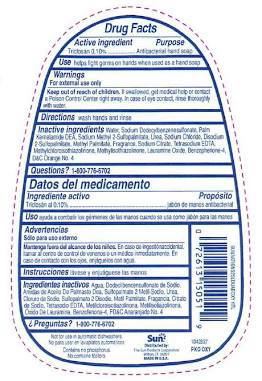
- Synthetic Fragrance ("Parfum"): This is the biggest red flag of all. Thanks to cosmetic labeling loopholes, brands can hide hundreds of undisclosed chemicals under the single word "fragrance" including phthalates, which are known endocrine (hormone) disruptors.
- Sulfates (SLS & SLES): Commonly listed as Sodium Lauryl Sulfate or Sodium Laureth Sulfate. These are aggressive foaming agents that strip your skin of its natural, protective oils, often leading to dryness, irritation, and eczema. Furthermore, SLES carries a risk of being contaminated with dioxane, a known carcinogen.
- Parabens: Used as cheap preservatives to stop bacteria growth. The problem? They can mimic estrogen in the body and are widely flagged as hormone disruptors.
- Chemical Preservatives (MIT/MCI): If you see Methylisothiazolinone or Methylchloroisothiazolinone on the label, put it back. These are notorious allergens and are among the most common causes of contact dermatitis.
2. What a Real, Non-Toxic Ingredient List Looks Like
True, traditional soap is made through a process called saponification a natural chemical reaction where fats or oils are mixed with an alkali (like sodium hydroxide, also known as lye). Once the reaction is complete, no lye remains in the final product. You are left with pure, moisturizing soap and natural glycerin.
When you're shopping for non-toxic soap, the ingredient list should be short, simple, and packed with things you can actually pronounce.
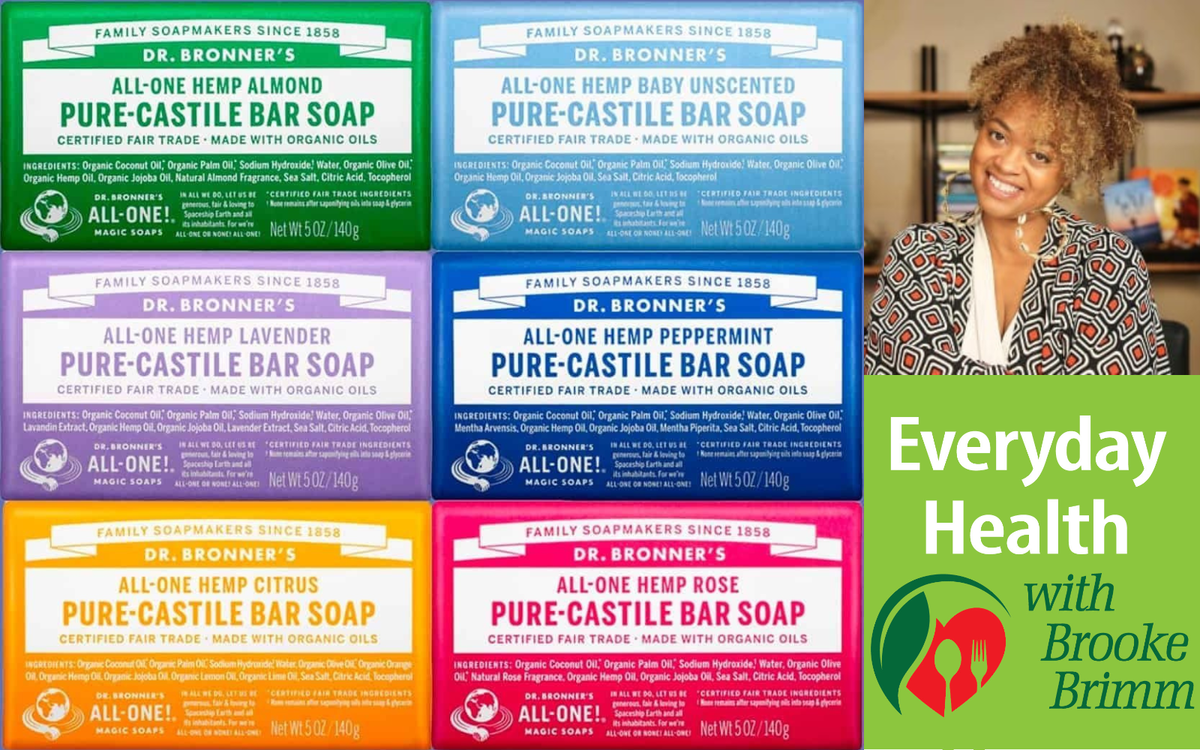
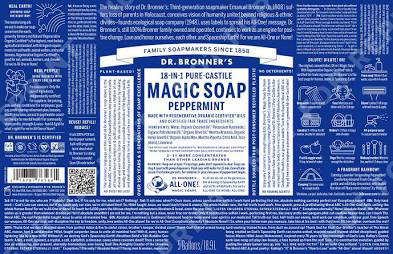
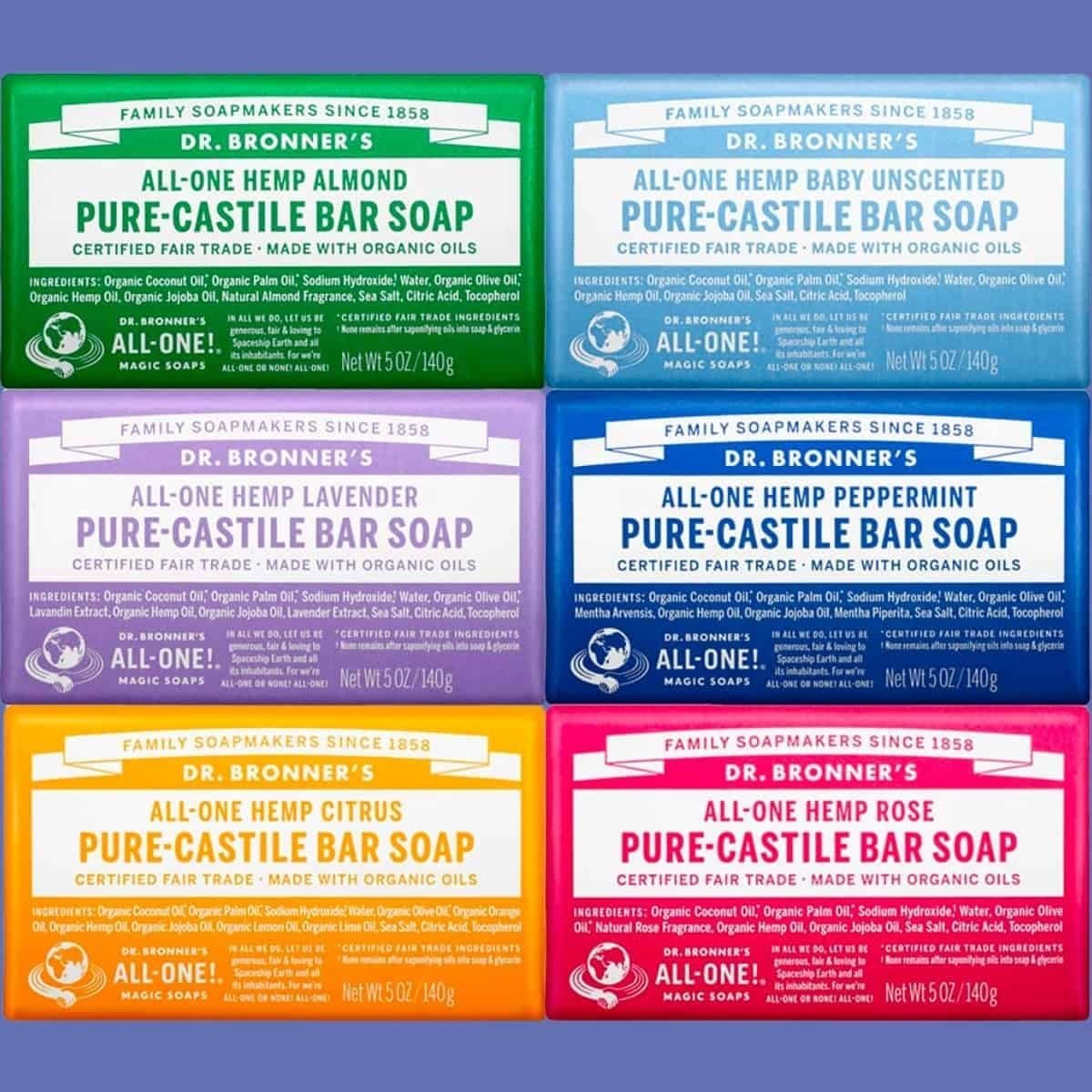
As you can see on the labels above, a healthy soap focuses on:
- Saponified Plant Oils & Butters: Look for organic coconut oil, olive oil, shea butter, castor oil, or cocoa butter. These gently cleanse while preserving your skin's moisture barrier.
- Essential Oils (for scent): If you want scented soap, ensure it comes from pure essential oils (like lavender, tea tree, or sweet orange) rather than synthetic perfumes.
- Natural Colorants & Additives: True natural soaps use clays (like kaolin or French green clay) for detoxification, charcoal, or plant-based powders (like turmeric or spirulina) for color.
 Dr. Brooke Brimm
How to Make the Switch: A Quick Action Plan
If you want to clean up your bath routine without getting overwhelmed, follow this simple roadmap:
Do an inventory audit
Gather the hand soaps, body washes, and bar soaps currently in your home. Flip them over and check for "fragrance/parfum," "sodium lauryl sulfate," or "methylisothiazolinone".
Finish what you have (or donate)
There is no need to throw away perfectly good products instantly if you aren't highly sensitive. Use them up, or if you prefer to swap immediately, donate unopened bottles to local shelters.
Swap your highest-use soaps first
Start with your kitchen and bathroom hand soaps, as these get used dozens of times a day. Liquid Castile soap (like Dr. Bronner's) diluted with water in a foaming pump is an incredibly easy, budget-friendly swap.
Transition to bars for body wash
Next shopping trip Ditch plastic-bottled synthetic body washes and swap to triple-milled, plant-based bar soaps. They have shorter ingredient lists, last longer, and cut down on plastic packaging.
A Note on "Unscented" vs. "Fragrance-Free"
Always opt for fragrance-free if you have sensitive skin. "Unscented" products often contain masking chemicals to hide the smell of other raw ingredients, whereas "fragrance-free" means no scent compounds were added at all.
Making the switch to non-toxic soap is one of the most satisfying acts of self-care you can do. Your skin is your barrier to the world treat it gently!
 Dr. Brooke Brimm
Thanks for reading the whole story!
At Atlantic City Focus, we're committed to providing a platform where the diverse voices of our community can be heard, respected, and celebrated. As an independent online news platform, we rely on a unique mix of affordable advertising and the support of readers like you to continue delivering quality, community journalism that matters. Please support the businesses and organizations that support us by clicking on their ads. And by making a tax deductible donation today, you become a catalyst for change helping to amplify the authentic voices that might otherwise go unheard. And every contribution is greatly appreciated. Join us in making a difference—one uplifting story at a time!