
How PAP Advocates for Students Facing Out of District Placement
When it comes to having an IEP (Individualized Education Program) meeting with your child's school, you would think it would be a smooth, easy transition to help your child do better. But according to the support group Parents Assisting Parents, the reality of these meetings can be the complete opposite of that ideal experience.
Loads of pressure can be put on you by the school's administration, demanding signatures and stacks of paperwork to prove why your child is “not their problem” and without knowing your rights as a parent, you too can have a difficult time navigating the system.

“No parent should go alone” says Maria Ortiz, the founder and president of Parents Assisting Parents(PAP) and Mother of Special Needs twins.
PAP is a free advocacy group built by and for families of children with disabilities. Alongside her Board Members Talia Manno, the group's secretary, and Monique Doggett, its treasurer.
Their mission is to empower families with the support and resources they need to navigate challenges and improve the quality of life. They attend IEP meetings, board of education hearings to speak on students' behalf, and take late-night phone calls with parents who don't know where else to turn.
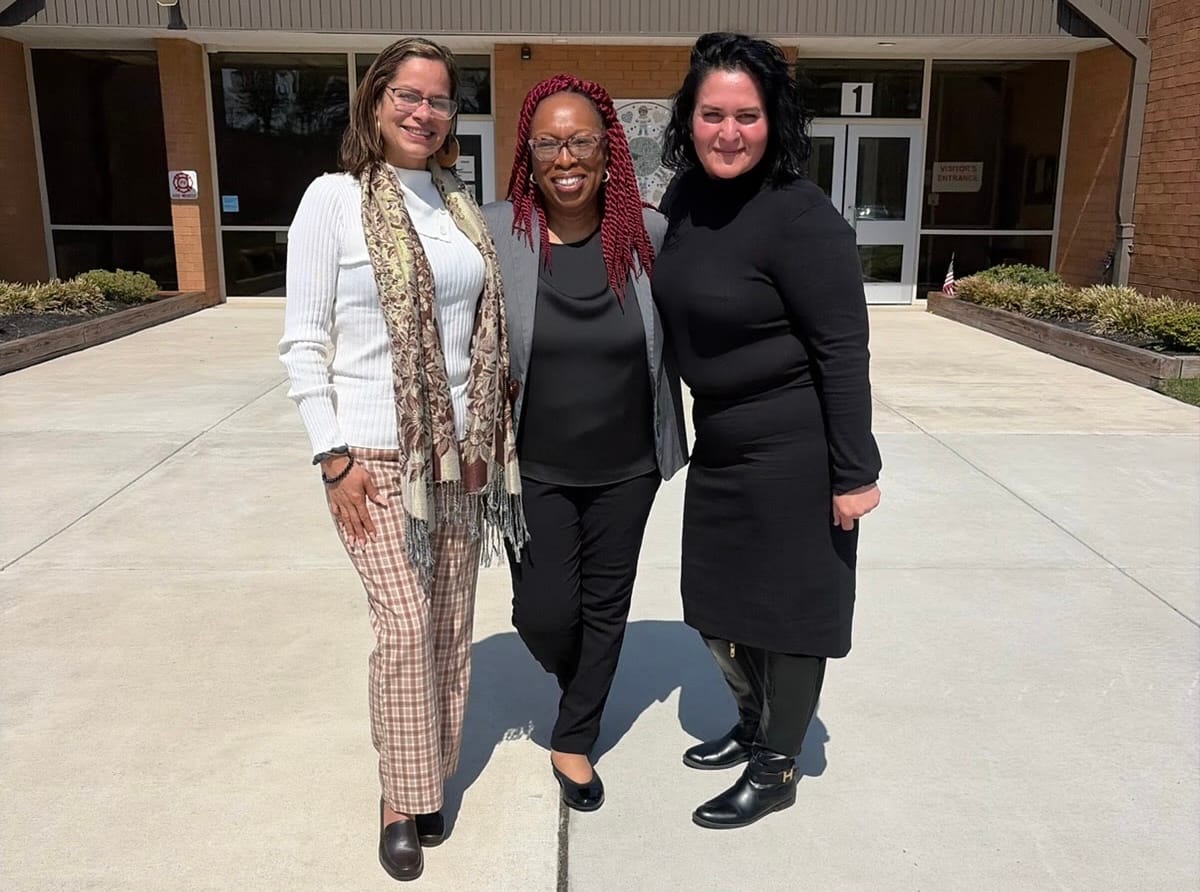
Maria explains that what started as a group of parents petitioning to save minority teachers' jobs in the Ventnor school district turned into a growing group of advocates, silent partners, and special needs parents supporting one another against schools' treatment of children with disabilities. Talia and Monique explain how PAP helped them so much with their special needs children that they decided to give back by helping other families.
Katie Costello, a longtime community member who went to the same school district as her son, shared her gratitude for how PAP helped her and her son fight against the Ventnor school district. She had issues with Ventnor, who were trying to send her son out of district to a school in Cherry Hill, which on the best of days is an hour away from Ventnor. Katie’s says her son was capable of staying at Ventnor with his childhood friends, he just needed reasonable accommodations. Katie says the issue was resolved “pretty quickly” shortly after PAP got involved.
“They have always been there to answer questions and offer support. I felt like they were a really useful resource for me and a helping hand in a very emotional and trying time,” Katie said.
The tactics, Maria says, range from scheduling IEP meetings without parental consent to holding meetings entirely without the parent present. Most alarming, she recounts a teacher approaching her after a board of education meeting, in tears, after reporting that she witnessed a colleague forge a parent's signature on an IEP, removing services from a child whose parent didn't speak English and didn't know what the document said.
James Reina, superintendent of Oakcrest High School in Mays Landing NJ, is not affiliated with the district described above, but agreed to explain how IEP funding and dispute processes generally work under New Jersey law.
Reina said IEPs are governed by both state and federal law, which set minimum requirements for the services schools must provide. Districts receive general funding through local taxes and state aid, along with separate state and federal money earmarked specifically for students with IEPs. New Jersey also follows a “least restrictive environment” standard, meaning schools aim to give students with disabilities as natural and inclusive an educational setting as possible, offering a range of program types depending on student needs, from in-class support to more specialized settings.
When a parent disagrees with the services their child is receiving, Reina described a step-by-step process. First to review the concern is a case manager, who is part of the student’s child study team. If the issue isn’t resolved, it can be escalated to a principal or the district’s director of special education. If the parent and district still can’t reach an agreement, the parent has the right to pursue due process, a formal legal mechanism through the state.
“There is a legal process called due process, and a parent can actually, there’s a prescribed program that a parent follows to actually seek legal assistance and legal remedy,” Reina said, adding that in his district this happens roughly once every two or three years.
On funding, Reina said money specifically earmarked for special education, whether from the state or federal government, is legally restricted to student services such as teachers, paraprofessionals, or specialized programming. General bonus money, by contrast, would come out of a district’s regular salary rather than special education funds. He said his own contract includes no performance bonuses, just a base salary, though he noted this varies by district and by contract.
Reina also said districts are required to make interpretation services available to parents who don’t speak English, at no cost to the family, and that his district contracts with a third party translation service beyond the bilingual staff already in each building.
If you're a parent or a family that feels alone in navigating your child's IEP (Individualized Education Program) process Parents Assisting Parents wants you to know that there is help available and that the Group welcomes you whether you need support, or want to be a silent partner. For those looking to get involved or in need of support, Maria can be reached at 609-214-7080. The group is currently in the process of obtaining nonprofit status, and while monetary donations are not being accepted just yet, the community is encouraged to stay connected for updates on fundraisers and formal programming.
Thanks for reading the whole story!
At Atlantic City Focus, we're committed to providing a platform where the diverse voices of our community can be heard, respected, and celebrated. As an independent online news platform, we rely on a unique mix of affordable advertising and the support of readers like you to continue delivering quality, community journalism that matters. Please support the businesses and organizations that support us by clicking on their ads. And by making a tax deductible donation today, you become a catalyst for change helping to amplify the authentic voices that might otherwise go unheard. And every contribution is greatly appreciated. Join us in making a difference—one uplifting story at a time!
The Unity & Heritage Exhibition is on display until December at The African American Heritage Museum Of Southern New Jersey.