Kamala Harris, UN Blockchain Week, and the Fight to Put Black Communities in the Crypto Conversation
How much do you know about Crypto Currency?


The Drums Outside Town Hall
NEW YORK — I was walking through Times Square yesterday evening, my mind still buzzing from a Dell Technologies AI demonstration, when I heard the drums. Then the chants. Then I saw the police barriers and the crowd gathering outside Manhattan’s Town Hall theater. An officer, looking as confused as I felt, told me simply: “She’s launching her book inside.”
She was Kamala Harris, and the book was 107 Days—her memoir about the whirlwind presidential campaign that began when Joe Biden stepped aside and ended with Donald Trump’s return to power.
What I didn’t expect was to find myself at the center of a moment that crystallized everything I’ve been thinking about Atlantic City, about my daughter’s journey from our Boardwalk to Howard University, and about the digital divide that’s reshaping American politics in ways we’re only beginning to understand.
The Roar of Recognition
Inside that packed theater, something electric happened every time Harris mentioned Howard University. The crowd—filled with fellow alumni—erupted in a roar that seemed to shake the building’s foundations. I thought immediately of my daughter, who made that same journey from Atlantic City to Howard, carrying with her not just our family’s hopes but the dreams of a community that has always understood what it means to be overlooked, underestimated, and yet resilient.
That roar was more than school pride. It was recognition—of seeing yourself reflected in power, of witnessing someone who looked like you, who came from institutions like yours, standing on stages that had been closed to people like us for centuries. Harris, the first Black woman to run for president, was also a Howard alumna, and in that moment, the personal became historical.
But even as the crowd celebrated, protesters infiltrated the audience. “Your legacy is genocide,” one shouted, his voice cutting through the applause. “The blood of the Palestinians is on your hands.” Harris didn’t dismiss them. “What’s happening to the Palestinian people is outrageous and it breaks my heart,” she said, while criticizing Trump for giving Israeli Prime Minister Benjamin Netanyahu “a blank check to do whatever he wants.”
The Question I Couldn’t Ask
I had come to that theater with a question burning in my mind, one that connects directly to the work I do in Atlantic City around digital inclusion and Web3 technology. I wanted to ask Harris why she had remained silent on cryptocurrency and Bitcoin policy—why she hadn’t attended the Bitcoin conference, why she hadn’t taken a stand on what many see as a bipartisan issue that could reshape economic opportunity in America.
This isn’t about technology for technology’s sake. The 2024 election revealed something profound: one in seven American voters now own cryptocurrency, and they voted disproportionately for Trump. The industry invested $131 million into congressional races, and 85 percent of its supported candidates won. Trump’s strategic embrace of the crypto community—speaking at the Bitcoin 2024 conference, aligning with crypto advocate Robert F. Kennedy Jr.—created a coalition many believe was key to his victory.
So when we ask why Harris remained silent on crypto policy, we are really asking an ancient question: Who gets to shape the future of money and economic power? Who gets included in the conversation about financial innovation, and who gets left behind?
Digital Inclusion as Civil Rights
What I’ve learned from my work in Atlantic City is that every new technology carries within it the seeds of both liberation and exclusion. Blockchain and cryptocurrency could democratize finance, create new pathways to wealth building, and give communities like ours more control over our economic destiny. But they could just as easily become another system that concentrates power in the hands of those who already have it.
Robert F. Kennedy Jr. understood this. He put “most of his wealth” into Bitcoin and bought Bitcoin for each of his children. His alignment with Trump created a formidable coalition that appealed to voters seeking alternatives to traditional financial systems—systems that have historically excluded Black and brown communities from wealth.
The paradox is striking: a technology born from ideals of decentralization and sovereignty was embraced by a movement many in our community view with deep suspicion. Meanwhile, the Democratic Party—long associated with economic justice—ceded the entire conversation.
The Continuity of Erasure
As I left the book launch and walked toward the Washington Elite crypto event at Hard Rock Café—part of the broader UN Blockchain Week—I couldn’t shake the feeling I was witnessing a familiar pattern. Once again, a conversation about the future was unfolding without meaningful input from the communities most likely to be affected.
This is the same erasure I document in Atlantic City’s hidden histories—the way Black contributions to technology, finance, and innovation get written out of the official narrative, only to be rediscovered generations later. The difference now is that we have the tools to insert ourselves into these conversations in real time. But only if we choose to use them.
Harris’s silence on crypto policy wasn’t just a missed opportunity. It was a failure to engage with one of the most significant technological shifts of our time—a shift that could either expand economic opportunity or further entrench inequality.
The Black Crypto Paradox
Here’s where the story cuts close to home. Black Americans are adopting cryptocurrency at higher rates than any other group—18 percent of Black adults have invested in, traded, or used crypto, compared to 13 percent of white adults. Unlike white consumers, Black people are more likely to own cryptocurrency than traditional assets like stocks and mutual funds.
This isn’t by accident. With Black household median wealth at just $24,100—less than 15 percent of white households’ $188,200—crypto feels like a rare chance to close the wealth gap quickly. More than a quarter of Black investors expect annual returns of 20 percent or higher. For communities systematically excluded from traditional wealth-building, crypto offers the promise of leveling the field.
But here’s the paradox: while Black Americans are embracing this technology at unprecedented rates, we’re largely absent from the rooms where its rules are being written. We are early adopters but not decision makers. Users but not architects.
The Atlantic City Problem
This brings me back to my city. Atlantic City has blockchain casinos, but no blockchain programming courses in its schools. We have casino-funded scholarships, but no Web3 training programs in our community colleges. We have tourists spending crypto at the Hard Rock, but residents without the infrastructure to build their own projects.
Black leaders in cities like mine are being forced into impossible positions—attacked for the policies they champion, their authority chipped away, their contributions minimized. At the same time, silence on cryptocurrency, blockchain, and digital inclusion leaves our communities stranded at the edge of the next economic revolution.
The Drums That Keep Beating
That’s why Atlantic City must be part of this conversation. The question of digital inclusion is not technical—it’s historical. It’s the latest chapter in the long story of who gets to write the rules of wealth and power in America.
The drums I heard outside that theater weren’t just about foreign policy. They were demanding accountability, demanding to be heard, demanding that power acknowledge the voices it has tried to silence. In the crypto world, in Congress, in conversations about AI and digital inclusion, we need those same drums beating.
Because the future is being written right now, in conference rooms and on trading floors and in the code of smart contracts. The question is whether we’ll be holding the pen—or whether we’ll once again be reading about it later, written by someone else.
And if history teaches us anything, it’s this: when we are not at the table, we are on the menu.
Thanks for reading the whole story!
At Atlantic City Focus, we're committed to providing a platform where the diverse voices of our community can be heard, respected, and celebrated. As an independent online news platform, we rely on a unique mix of affordable advertising and the support of readers like you to continue delivering quality, community journalism that matters. Please support the businesses and organizations that support us by clicking on their ads. And by making a tax deductible donation today, you become a catalyst for change helping to amplify the authentic voices that might otherwise go unheard. And every contribution is greatly appreciated. Join us in making a difference—one uplifting story at a time!
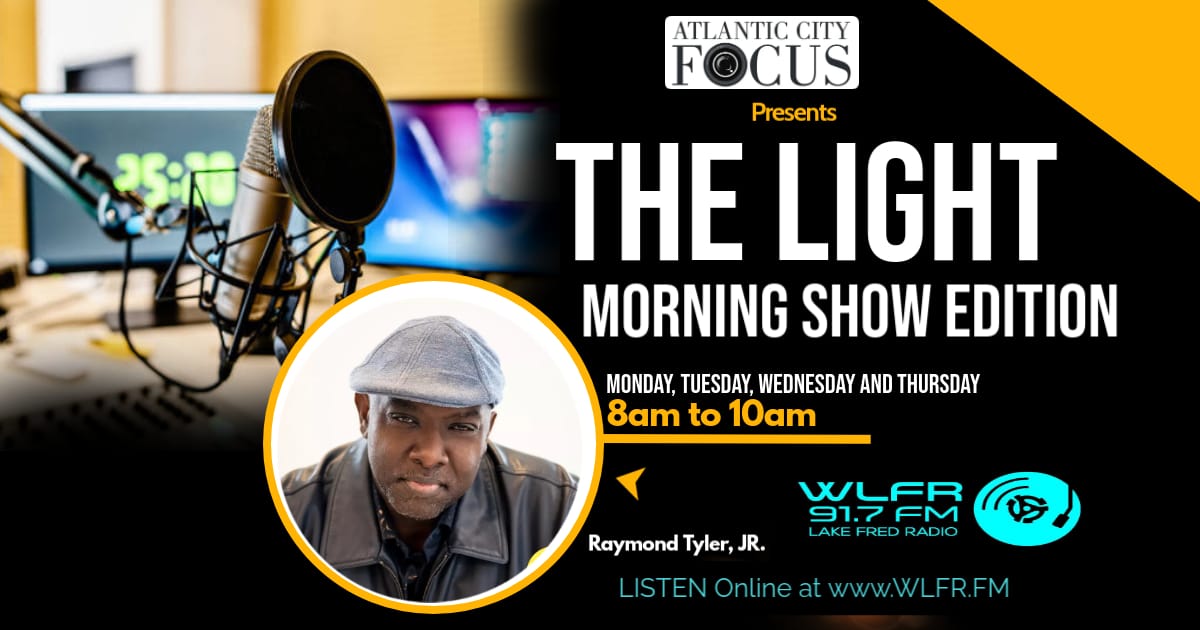
GET UP WITH ATLANTIC CITY FOCUS and RAYMOND TYLER
STARTING MONAY, FEB 10th AT 8AM!