
Doomscrolling and the Decline of Attention Spans: How Social Media Is Rewiring Our Focus
From TikTok loops to constant notifications, today’s digital habits are making it harder for students to concentrate—and here’s what we can do about it.
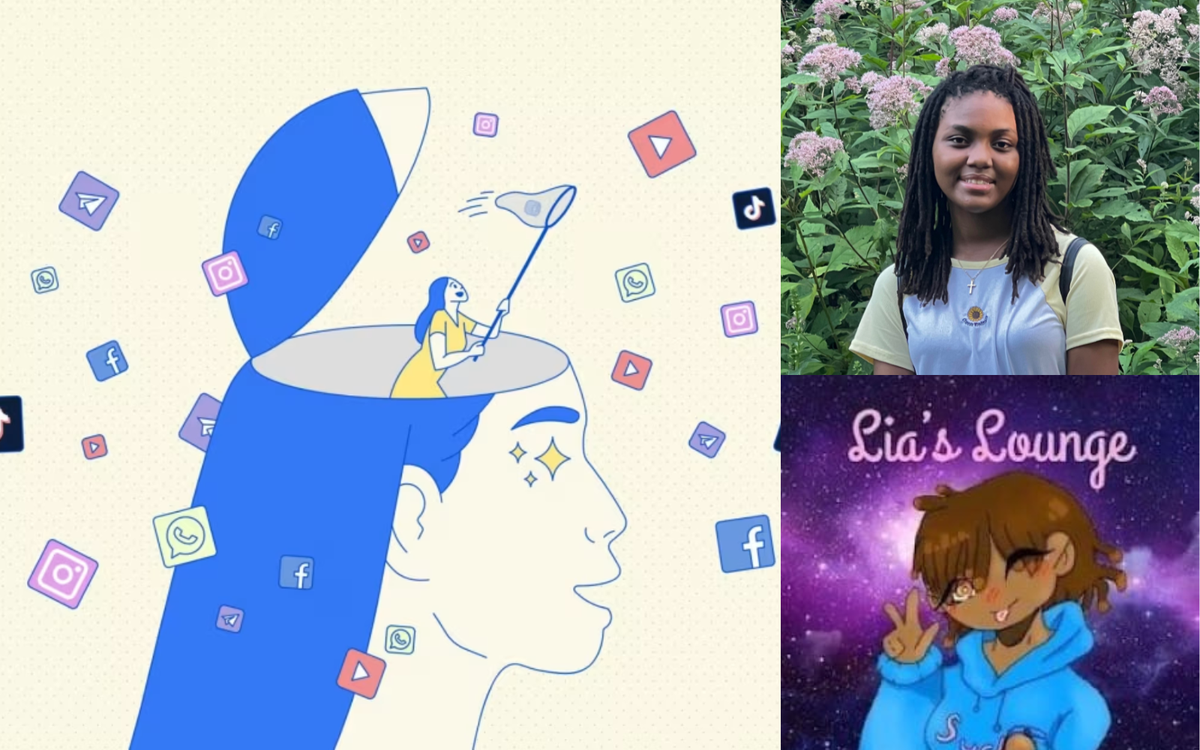

Do you ever find yourself in your room doom scrolling on social media for hours at a time? Tirelessly scrolling past an endless stream of meme compilations where people fall in all sorts of hilarious ways, while tossing your work to the side. Then, once you start working, you just can’t seem to make sizable progress. Well, this is the result of a short attention span.
No, the average attention span is not shorter than a goldfish. But it’s been shown in a study by “researchers at Pennsylvania State University and Stanford University,” that people looked at their mobile devices 228 times on a daily basis, and 34% of the time people were on social media due to the “dopamine loop” that causes us to endlessly crave more content.

Now this doesn’t mean that every time we open social media our attention span decreases. However, the constant distractions within these platforms can gradually hinder people’s ability to pay attention.
These distractions can cause people to lose their focus on their tasks and hinder their progress. For example, in a questionnaire study published in media by psychologist Subramanian, “28%” of workers' time is spent dealing with “at least six to eight distractions daily,” with social media being a primary culprit. Since the hyperlinks, notifications, and ads embedded in social media’s software cause distraction, workplace productivity may decrease.

These distractions can even cause college students to procrastinate more often when trying to complete school work. For instance, according to a study published by Frontiers in Psychology, because social media offers instant pleasure, college students with short attention spans may “spend more time on distractions” even if they try to be productive. This can cause students’ progress on assignments to be delayed. Short attention spans can also cause college students to lose focus during class. While a professor is lecturing, many college students can zone out and hear the famous Charlie Brown teacher’s voice “womp womp womp womp” coming out of the professor’s mouth. These factors, combined, may trample a college student’s motivation to learn.
Why is social media so detrimental to our attention span?
Because of social media’s emphasis on fast paced content. It’s no surprise that Tik Tok is the leading pioneer for the spread of 30 second content, and has influenced other social media sites to add spaces for short form content. Why watch a 20 minute vlog on Youtube when you can watch 40 Day-in-my-life Tik Toks in the same amount of time? Since these videos are so short, watching a lot of them can’t be that bad right? However, according to engineer Yuhan Chen and other researchers, these videos are so “intensive [and] engaging” that college students are more prone to addiction. This short form addiction can manifest itself in doom scrolling, which ultimately leads to attention being lost after short periods of time.

Not only are these videos really short, but they are also over-stimulating. Overstimulation is when the brain is bombarded with too many things going on at once. It’s practically everywhere on social media because many videos have fast cuts between frames, loud sounds, overly saturated colors, or excessive visuals on the screen. Since these social media videos are similar to highly stimulated TV shows, as seen in another study published by Frontiers in Psychology by Gentile Swing and others, the “capacity to maintain concentration on other tasks” is hindered. This means that a person’s attention span can be lost quickly if there are not enough effects going on in their surroundings.
What can be done to improve short attention spans and reduce its negative effects?
This might sound crazy, but reading books of interest can help improve college students’ attention spans. It’s been proven in a study by biomedical engineer Mingyang Li and other researchers that reading books “[are] positively associated with brain volume[s]” such as “the prefrontal cortex,” which is responsible for "cognitive control.” This means that reading books positively affects attention span because attention is a part of the cognitive controls in our brain. So, we should pick up those books we’ve been interested in for a while but never had the time to read.

I hate to say it, but we should decrease our social media intake to limit its negative impacts on our attention. We can try placing screen time limits on these platforms to help reduce the desire to excessively stay on it. Or we can replace the time we spend on social media with some hobbies. This can allow us to have more time for things we enjoy. Instead of watching an ASMR video of someone munching and crunching on a bucket of chicken with a large fry and drink, we should find a recipe to cook and enjoy our meal.
Not everything about attention spans will be fixed instantaneously after reading a few books or cutting out social media for an hour or two. However, over time, if spending less time on social media and reading books more often becomes a habit in a person’s life, there may be gradual improvement.
Thanks for reading the whole story!
At Atlantic City Focus, we're committed to providing a platform where the diverse voices of our community can be heard, respected, and celebrated. As an independent online news platform, we rely on a unique mix of affordable advertising and the support of readers like you to continue delivering quality, community journalism that matters. Please support the businesses and organizations that support us by clicking on their ads. And by making a tax deductible donation today, you become a catalyst for change helping to amplify the authentic voices that might otherwise go unheard. And every contribution is greatly appreciated. Join us in making a difference—one uplifting story at a time!