AfaAI Restarts Community Effort to Bring African Languages Into AI
When artificial intelligence responds in your language, does it understand the way your community speaks, or does something get lost along the way? Native speakers, linguists and volunteers are invited to help build tools that reflect Igbo, Yoruba and Hausa languages.
Native speakers, linguists and volunteers are invited to help build tools that reflect Igbo, Yoruba and Hausa on their own terms.
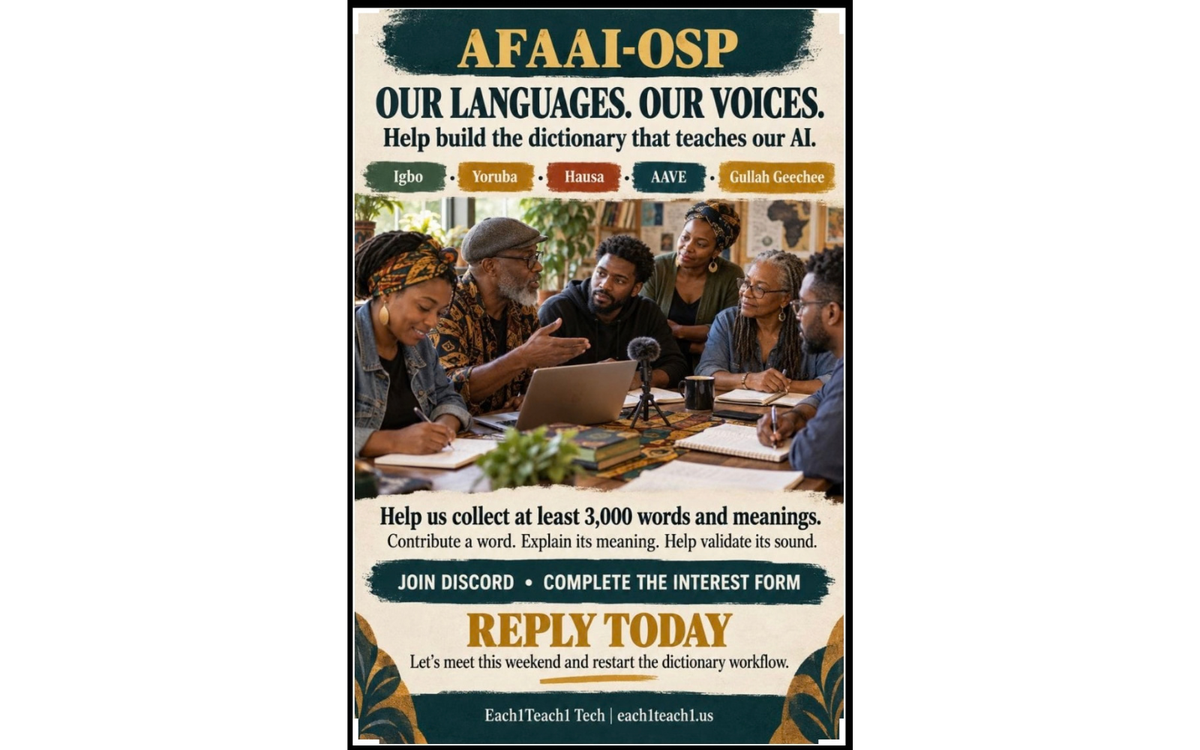
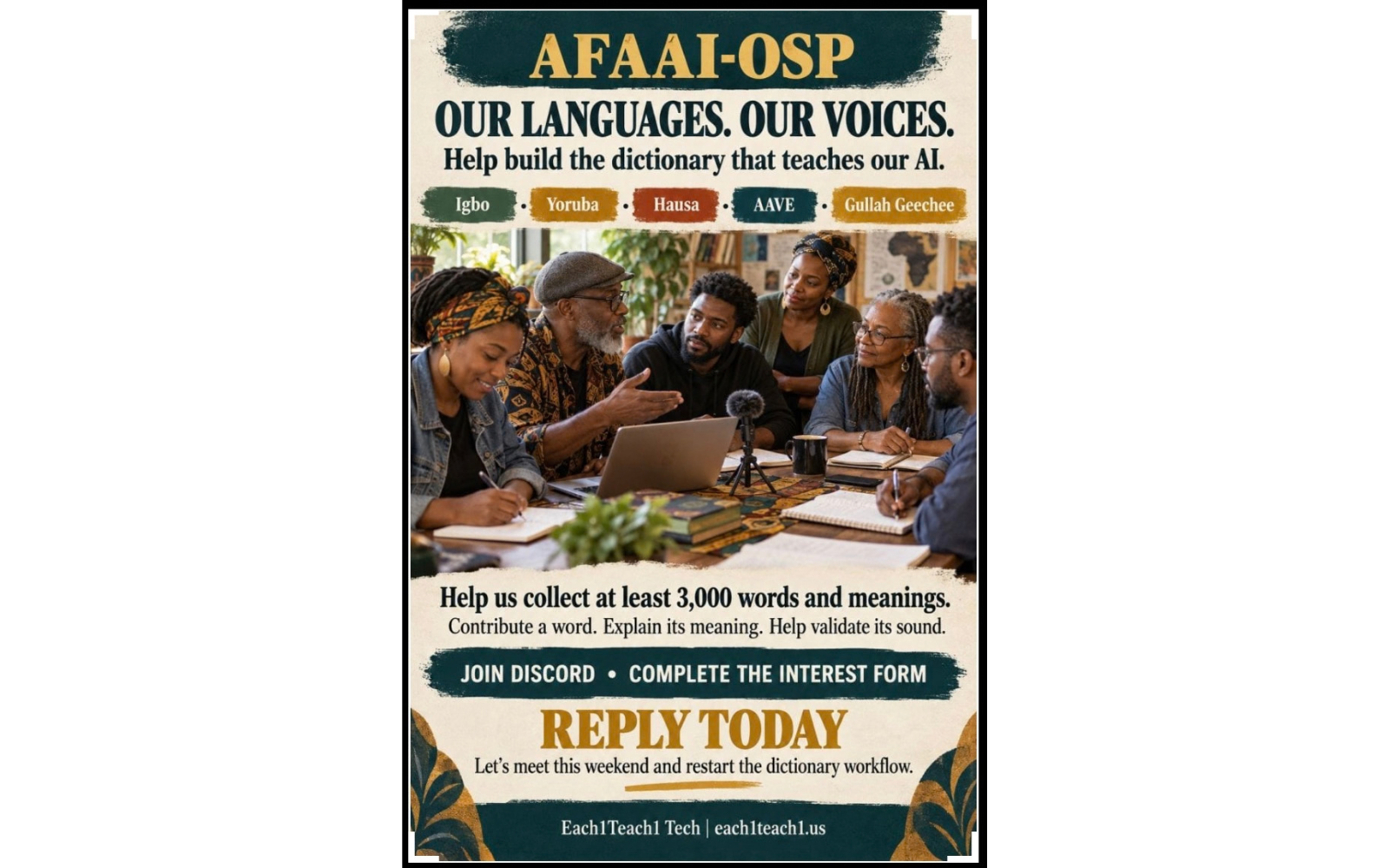
Do you speak Igbo, Yoruba, Hausa, African American Vernacular English (AAVE) or Gullah Geechee? AfaAI needs native and fluent speakers to help check words, explain meanings, review pronunciation and tones, and write everyday example sentences. You do not need programming experience or a linguistics degree to contribute.
The broader invitation includes AAVE and Gullah Geechee speakers, as highlighted in the project’s outreach flyer. The current dictionary development focus remains Igbo, Yoruba and Hausa. AAVE and Gullah Geechee contributors can join the Discord community to discuss language resources and how to participate.
When artificial intelligence responds in your language, does it understand the way your community speaks, or does something get lost along the way?
That question is driving AfaAI, an initiative supported by Each1Teach1 that is restarting its community work to help African languages participate more fully in artificial intelligence. The project is inviting native speakers, linguists, educators, developers and community volunteers to help build and evaluate its language resources.
The group generally holds a standing meeting on Saturdays at 11 a.m. Eastern Time on Discord, making participation possible from Atlantic City, across the African diaspora and from communities around the world.
Building AI Around the Language Itself
At a recent project meeting, Josiah Umezurike presented AfaAI’s approach to what the team calls augmented language intelligence. Its current focus is Igbo, Yoruba and Hausa.
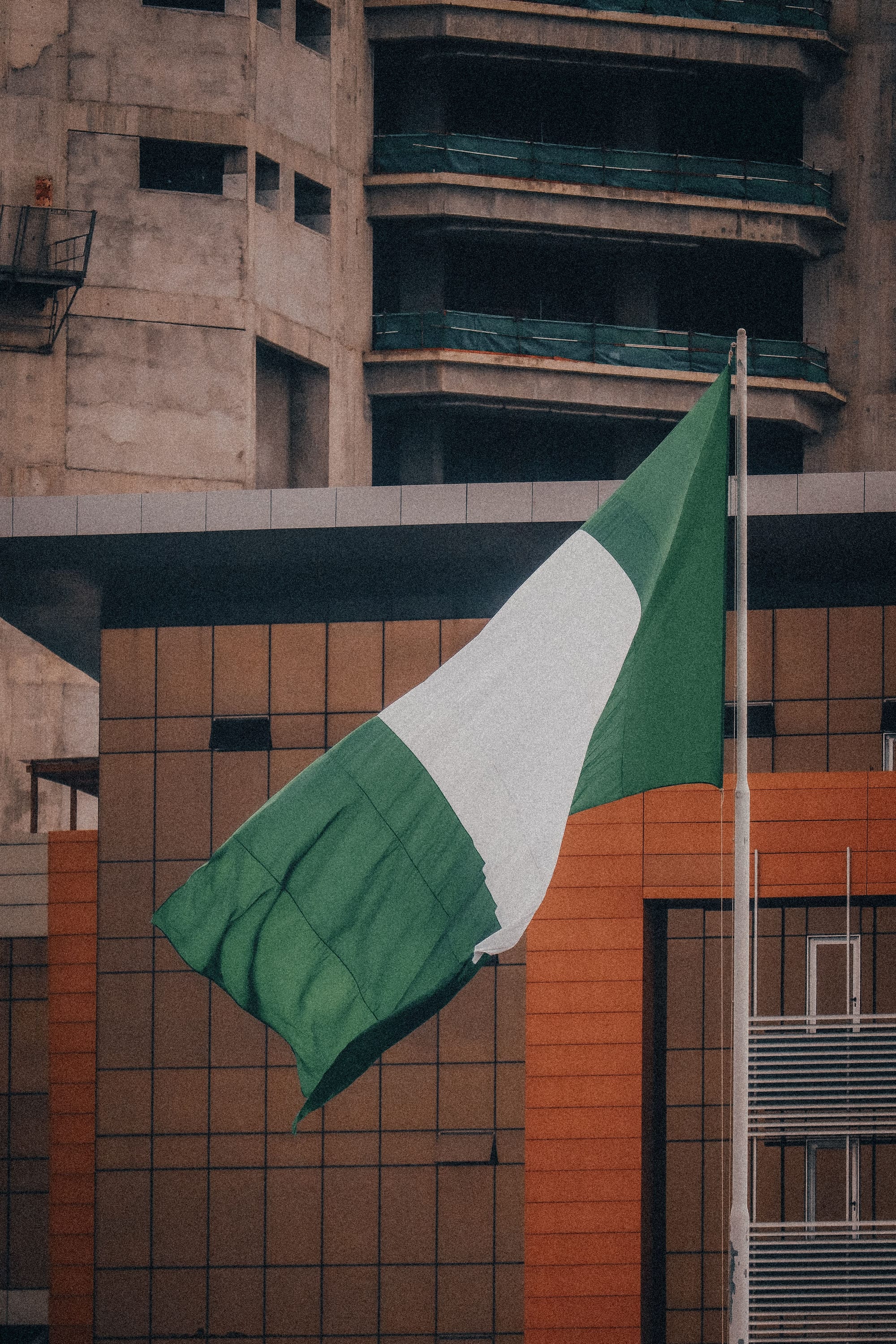
Nigeria is the primary country where Igbo, Yoruba and Hausa are spoken as native languages. Igbo is primarily spoken in southern Nigeria. Yoruba is primarily spoken in southwestern Nigeria and Hausa is primarily spoken in northern Nigeria as well as Niger, Ghana, Cameroon, Chad, and Sudan.
The aim is to develop AI that better represents each language’s own sounds, tones, word structures and sentence patterns. Project organizers are concerned that translation through an intermediary language can lose meaning and cultural context.
“Low-resource” refers here to the availability of digital material for developing language technology. It does not describe a language’s cultural richness or the knowledge of its speakers.
AfaAI’s proposed approach asks contributors to help document how their languages actually work, so that those patterns can inform the technology.
The Next Step: A Community-Checked Dictionary
The immediate goal is practical: collect and validate approximately 3,000 words across Igbo, Yoruba and Hausa, with an initial testing target of about 300 words.
According to the meeting summary, approximately 200 existing Igbo words need correction. The team also needs native-speaker input on Hausa language rules and sound patterns, alongside contributions in Yoruba.
That work involves more than compiling a list of translations. Contributors can help check spelling, explain usage, review tone information and create example sentences that reflect everyday speech.
The planned sequence is to build the text dictionary, test prompts and responses, have people verify the results, and then expand speech development using human voice samples.
A Project Still Taking Shape
Umezurike described a model built from scratch using a transformer architecture, a proposed unified 45-letter alphabet and tokens based on native sounds. A transformer is a type of neural network used in many language models.
The meeting included exploratory comparisons of how AfaAI and other AI systems broke down Igbo sentences. These demonstrations are part of the development process; they do not establish that AfaAI outperforms other systems.
The project’s audio remains computer-generated. Natural-sounding speech will require additional development, human voice contributions and native-speaker review.
For now, the invitation is to help build and test the foundation.
You Do Not Have to Be a Programmer
Native and fluent speakers can contribute knowledge that is essential to the project, whether or not they have a technical background. Here are three ways to contribute:
- Native and fluent speakers of Igbo, Yoruba, Hausa, AAVE or Gullah Geechee: Check language accuracy and natural usage.
- Linguists and language educators: Help document grammar, sounds and tone patterns.
- Other volunteers: Support technology, outreach and coordination.
Specific tasks include:
- Checking dictionary entries, spelling and meaning.
- Reviewing pronunciation and tone information.
- Writing and validating example sentences.
- Documenting language rules and regional usage.
- Testing responses and identifying errors.
- Supporting outreach, coordination and technical development.
Human voice contributions are also part of the future development plan. Interested participants can ask the team about recording tasks as that work progresses.
For Atlantic City Focus readers, this offers a way to connect local interest in culture, education and technology with a global effort. Readers can participate themselves or share the invitation with African language speakers, educators, students and community organizations.
How to Get Involved
Join the AFAAI Discord community to connect with the group and ask about current tasks. The standing meeting is generally held Saturdays at 11 a.m. Eastern Time. Check Discord for any schedule changes.
Complete the volunteer interest form to describe your language skills, interests and availability. Participation is volunteer-based.
Visit AfaAI.org to learn more about the initiative’s goals.
Read Josiah Umezurike’s LinkedIn post about AfaAI and share it with people who may want to contribute.
The larger ambition is to support education, communication, business and other uses of AI in languages that receive less attention in technology development. The next step begins with the people who know those languages best.
Disclosure: The author is founder of The Black History Foundation, which AfaAI’s website lists as a cultural preservation collaborator.
Thanks for reading the whole story!
At Atlantic City Focus, we're committed to providing a platform where the diverse voices of our community can be heard, respected, and celebrated. As an independent online news platform, we rely on a unique mix of affordable advertising and the support of readers like you to continue delivering quality, community journalism that matters. Please support the businesses and organizations that support us by clicking on their ads. And by making a tax deductible donation today, you become a catalyst for change helping to amplify the authentic voices that might otherwise go unheard. And every contribution is greatly appreciated. Join us in making a difference—one uplifting story at a time!